Thin Films Laboratory
A thin films deposition service for complex oxide thin films, metallic layers and heterostructures using pulsed laser deposition and sputtering technologies.
Thin film deposition for complex oxides and heterostructures
The Thin Films Laboratory offers researchers the capability to fabricate complex oxide thin films and heterostructures combining oxides and metals.
The service is based on pulsed laser deposition (PLD) for oxides and sputtering for metals, supporting advanced materials research, device-oriented studies and the optimisation of deposition conditions for new materials.
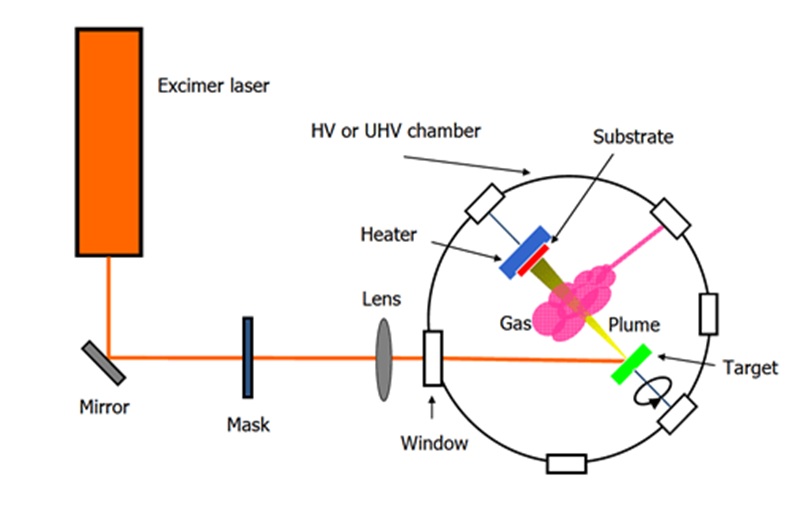
PLD is a physical vapour deposition technique that uses ultraviolet laser radiation to vaporize material from a target and transfer it to a substrate under controlled vacuum and atmosphere conditions.
Main laboratory capabilities
A deposition service for high-quality thin films, epitaxial oxide layers and metal/oxide heterostructures for advanced materials research.
Pulsed Laser Deposition
Sputtering
Heterostructures
Materials research
Equipment and deposition technologies
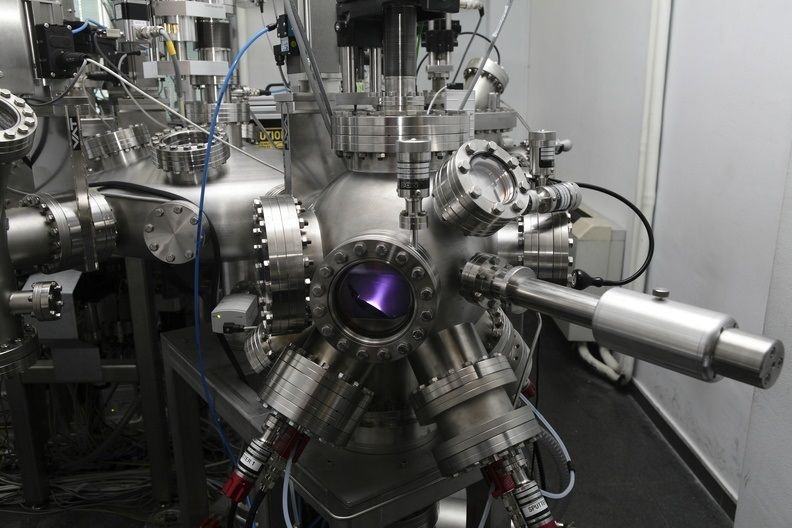
The laboratory includes PLD set-ups and sputtering capabilities designed for oxide and metal thin films deposition.
The technique is very suitable for oxides, and compared with other techniques is particularly useful to obtain films with complex stoichiometry and to grow epitaxial films and heterostructures. Moreover, PLD is highly versatile to optimize the deposition conditions of new materials, and the films can be grown in relatively fast processes. These characteristics favour the use of the technique by research groups having interest in different materials.
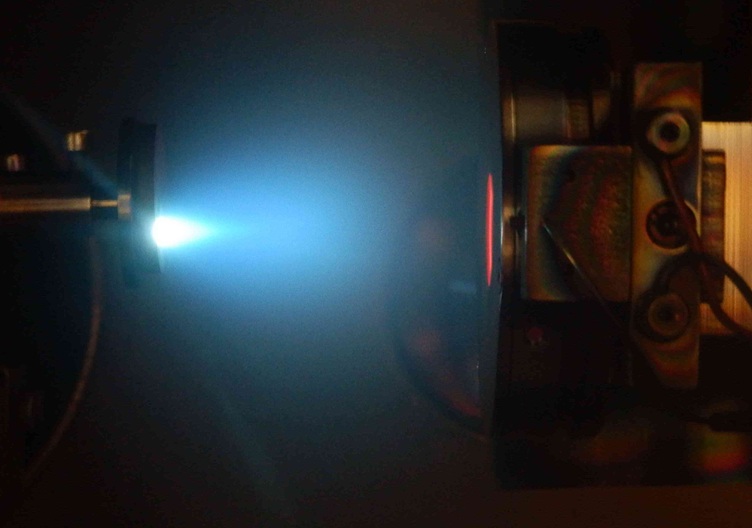
The pulsed beam of an ultraviolet laser (usually an excimer) is focused on a ceramic target placed in a vacuum chamber. The combination of pulsed irradiation, high photon energy, and high energy density can cause the ablation of the material. Ablation refers to the etching and emission of material under conditions totally out of the equilibrium. The plasma created expands fast along the perpendicular direction of the target (see the photography in Figure 2). A substrate is placed front the target, and inert or reactive gases are usually introduced during the deposition process.
From target ablation to functional thin films
PLD enables the growth of complex stoichiometry films and epitaxial heterostructures through controlled laser ablation, plasma expansion and deposition on substrates.
1
Select ceramic or metallic target.
2
UV laser vaporizes the target material.
3
Material expands towards the substrate.
4
Film grows under controlled atmosphere.
5
Conditions are tuned for material quality.
Request Service
Contact the Thin Films Laboratory team to discuss deposition needs, material system, target and substrate requirements, expected film structure and feasibility of the experiment.

The original page includes PLD service contact information and dynamic staff contacts, which are preserved below.
PLD Service
Thin Films Laboratory team
Technical staff, scientists in charge and user committee members supporting thin film deposition, PLD and sputtering workflows.
Technicians
Scientists in charge
User's Committee
Contact Thin Films Laboratory
ICMAB
Campus UAB
In front of Firehouse
08193 Bellaterra
Barcelona, Spain
Phone
ICMAB - Thin Films Laboratory
OpenStreetMap service required
to load this map.
OpenStreetMap service required
to load this map.