



Green supercritical-fluid technology for advanced materials
The Supercritical Fluids and Functional Materials group develops clean, flexible and scalable manufacturing routes based on supercritical CO2 for functional materials with applications in energy, environmental remediation and biomedicine.
The group works at the interface of materials chemistry, porous frameworks, graphene-based aerogels and hybrid nanostructures, using scCO2 as a non-toxic, low-surface-tension and highly diffusive medium for synthesis, processing, activation and functionalization.
Permanent Scientific Researchers
Research Technicians and PhD students

Alejandro Borrás
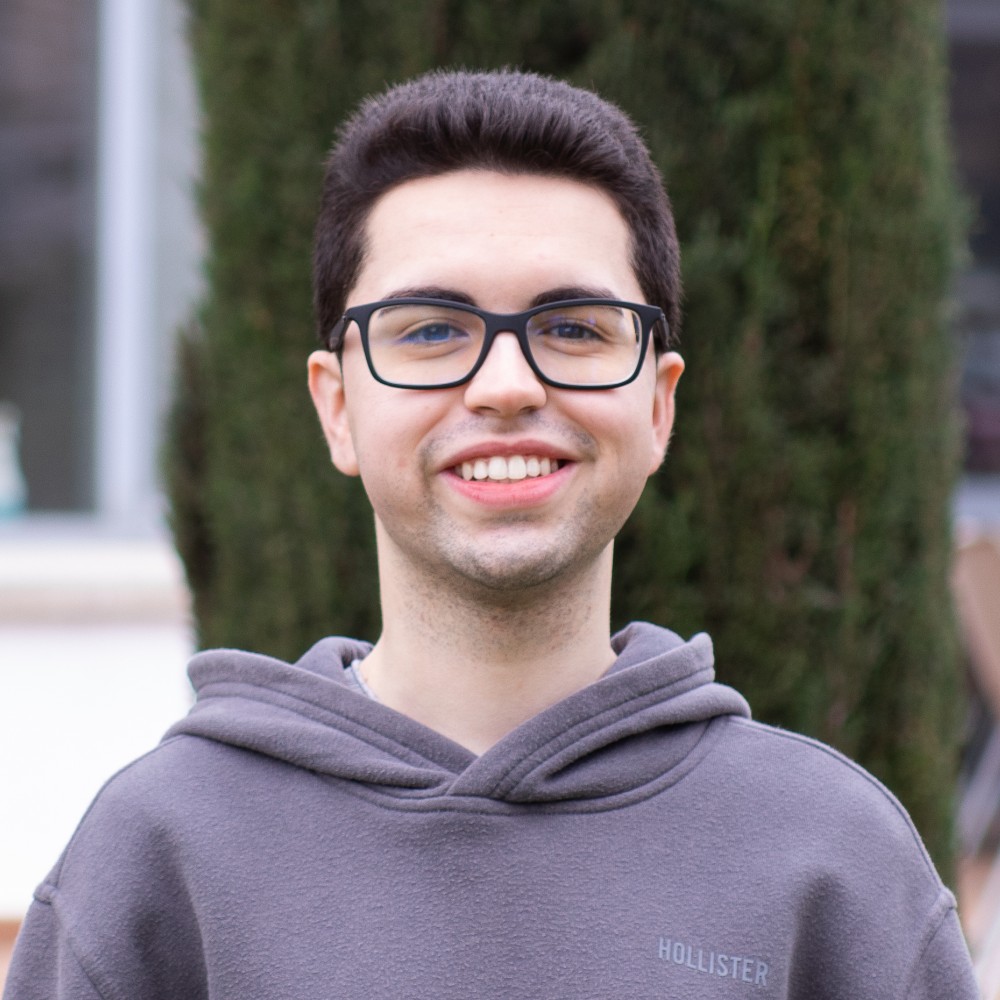
Adriá López

Alessandro Lorenzon
Supercritical CO2
scCO2 is a non-toxic and environmentally benign green solvent that has been widely used in the food and pharmaceutical industries. It reaches its supercritical conditions at 31.1 °C and 7.4 MPa and offers outstanding properties for advanced synthesis and materials processing.
scCO2 s an attractive alternative to pollutant or toxic organic solvents. As a non-destructive fluid with null surface tension, scCO2 is suitable for creating and manipulating complex primary nanoparticles, functional nanomaterials and nanostructures. Its low viscosity and high diffusivity allow exceptionally effective penetration in nanopores.

Coordination Polymers and Metal-Organic Frameworks
MOFs and coordination polymers prepared through scCO2-based routes, from early pioneering synthesis to advanced porous frameworks.

Graphene oxide aerogels
Scalable GO aerogels with high surface area, robust porous architecture and high functionalization capacity.


Hierarchically porous composites
Interconnected porous materials designed for environmental catalysis, gas adsorption, water remediation and therapeutic delivery.

More on MOFs

Metal organic frameworks
The SFFM group’s research on metal–organic frameworks builds on a long trajectory that began with pioneering work in the synthesis of coordination polymers using scCO2, demonstrating that this fluid can act simultaneously as solvent and activation agent.
This stage led to the preparation of more than twenty-five structures, ranging from rigid to flexible coordination polymers and including well-known MOFs such as ZIF-8, H-Kust-1 and MIL-100(Fe), obtained through the self-assembly of metal ions with bidentate or tridentate nitrogen-donor ligands.
These studies revealed the structural diversity achievable with M2+ transition metals, from simple one-dimensional chains to double-helical two-dimensional layers and fully developed three-dimensional frameworks.
More on Graphene Oxide Aerogels
We have developed a technology for producing GO aerogels from an alcoholic dispersion of graphene oxide. The process is carried out under isothermal and isobaric conditions and is readily reproducible, scalable and cost-effective, yielding a non-reduced final product.
The resulting aerogel combines stability and robustness with a high functionalization capacity thanks to the functional groups maintained from the starting graphene oxide. These aerogels have a high surface area, approximately 250 m2/g, and a pore volume between 0.9 and 1.5 mL/g.
The controlled self-assembly of 3D carbon macrostructures by supercritical CO2 opens applications in adsorption materials, membrane technologies, batteries, supercapacitors and metal catalyst supports.

Materials for Energy

CO2 to Methanol
Catalytic materials for thermal CO2 hydrogenations to methanol production
Recent studies explore zirconium-based MOFs capable of stabilizing dispersed metal species, such as copper, to create hybrid materials that capture and catalytically transform CO2 into methanol.

H2 production
Materials for H2 production from photocatalitic water splitting
Development of highly porous, mechanically robust aerogels and hybrid MOF-based sorbents for solar-driven photocatalytic water splitting provides to green H₂ generation

Materials for Environment

Water Remediation

Gas adsorption and separation

Materials for Health

Drug delivery

Supercritical CO2 enables gentle loading of active compounds and the deposition of protective surface layers without damaging the framework.
The group engineers MOFs as drug delivery matrices, enabling controlled release of active pharmaceutical ingredients within biocompatible, high-porosity scaffolds.
Photodynamc therapy

Porous MOFs based on a porphyrin linker and different metal centers were synthesized using supercritical CO2, coordinating through pyridyl groups and yielding moderately porous, sometimes defect-rich materials with limited crystallinity.
A Zn-based MOF showed strong photodynamic therapy activity, remaining non-toxic in the dark but killing most tumor cells after light activation at 630 nm.
- Novel zirconium-based MOF@rGO composite aerogel: Towards remediation of Hg(II) polluted water bodies to reach safe drinking limits.
Rosado, A.; Borrás, A.; Turull, M.; Díez, S.; Ruano, D.; Ayllón, J. A.; López-Periago, A. M.; Domingo, C. Chemical Engineering Journal, 510 (2025), 161824; DOI: 10.1016/j.cej.2025.161824. - Supercritical CO2 assisted bioMOF drug encapsulation and functionalization for delivery with a synergetic therapeutic value.
Rosado, A.; García-Fernández, L.; Aguilar, M. R.; Ramírez, R. A.; López-Periago, A. M.; Ayllón, J. A.; Domingo, C. Journal of Supercritical Fluids, 216 (2025), 106452; DOI: 10.1016/j.supflu.2024.106452. - Hydrophobic post-functionalization of a water instable bioMOF: Effect on CO2 and water adsorption.
Rosado, A.; Borrás, A.; Suárez-García, F.; Vallcorba, O.; López-Periago, A. M.; Ayllón, J. A.; Domingo, C. Applied Materials Today, 42 (2025), 102573. - Multifunctionalized zirconium-based MOF as a novel support for dispersed copper: application in CO2 adsorption and catalytic conversion.
Rosado, A.; Popa, I.-M.; Abo Markeb, A.; Moral-Vico, J.; Naughton, E. M.; Eckhardt, H.-G.; Ayllón, J. A.; López-Periago, A. M.; Domingo, C.; Negahdar, L. Journal of Materials Chemistry A, 12 (2024), 21758–21771; DOI: 10.1039/D4TA03268C. - BioMOF@cellulose Glycerogel Scaffold with Multifold Bioactivity: Perspective in Bone Tissue Repair.
Rosado, A.; Borrás, A.; Sánchez-Soto, M.; Labíková, M.; Hettegger, H.; Ramírez-Jiménez, R. A.; Rojo, L.; García-Fernández, L.; Aguilar, M. R.; Liebner, F.; López-Periago, A. M.; Ayllón, J. A.; Domingo, C. Gels, 10(10) (2024), 631; DOI: 10.3390/gels10100631. - Green Supercritical CO2 Synthesis of [Copper Clusters@FeBTC]@rGO Catalyst for Highly Efficient Hydrogenation of CO2 to Methanol.
Kubovics, M.; Borrás, A.; Abo Markeb, A.; Marbán, G.; Moral-Vico, J.; Sánchez, A.; López-Periago, A. M.; Domingo, C. ACS Sustainable Chemistry & Engineering, 12 (2024), 10634–10646; DOI: 10.1021/acssuschemeng.4c03656. - Facile, fast and green synthesis of a highly porous calcium-syringate bioMOF with intriguing triple bioactivity.
Rosado, A.; Vallcorba, O.; Vázquez-Lasa, B.; García-Fernández, L.; Ramírez-Jiménez, R. A.; Aguilar, M. R.; López-Periago, A. M.; Domingo, C.; Ayllón, J. A. Inorganic Chemistry Frontiers, 10 (2023), 2165–2173; DOI: 10.1039/D2QI02639B. - Supercritical CO2 Synthesis of Porous Metalloporphyrin Frameworks: Application in Photodynamic Therapy.
Kubovics, M.; Careta, O.; Vallcorba, O.; Romo-Islas, G.; Rodríguez, L.; Ayllón, J. A.; Domingo, C.; Nogués, C.; López-Periago, A. M. Chemistry of Materials, 35 (2023), 1080–1093; DOI: 10.1021/acs.chemmater.2c03018. - Role of Graphene Oxide Aerogel Support on the CuZnO Catalytic Activity: Enhancing Methanol Selectivity in the Hydrogenation Reaction of CO2.
Kubovics, M.; Trigo, A.; Sánchez, A.; Marbán, G.; Borrás, A.; Moral-Vico, J.; López-Periago, A. M.; Domingo, C. ChemCatChem, 14 (2022), e202200607; DOI: 10.1002/cctc.202200607.
- MICIU. Matrans42 SO project 2024–2028. Sustainable, stable (photo)catalysts for green fuels production. IP: A. Ponrouch. SubIP challenge: López-Periago. Budget: 147,000 €.
- MICIN. TED 2021. Sustainable and cost-efficient overall solution for high-quality biofuel production from waste biomass (SUGAI). Coordinated project IP: Ana M. López-Periago. Subproject MITIGATE: Multifunctional graphene-based materials for biofuel production. Budget: 125,000 €. Dates: 01/12/2022–30/11/2025.
- PIE-CSIC 202260I088. Síntesis y procesado de materiales funcionales utilizando tecnología de CO2 supercrítico. Budget: 5,000 €. Dates: 03/11/2022–31/12/2023.
- MICIN AYUDA INC.CIENT.CEX 2019 Ref: 116AP2. Budget: 25,000 €. Dates: 2022–2023.
- PID2020-115631GB-I00 ARIGATO. Avant-garde Research Implying Graphene Aerogel for Technological Outgrowth. IP: López-Periago & Domingo. Budget: 175,000 €. Dates: 01/09/2021–31/08/2024.
- ALBA-Synchrotron. XALOC BL. Several projects. IP: López-Periago. 2018, 2019, 2020, 2023.
- COST ACTION CA18224 GREENING. Green Chemical Engineering Network towards upscaling sustainable processes. IP: Ana Rita Duarte. Dates: 2019–2023.
- CTQ2017-83632-C2-2-P NAMASTE. Materiales nanoporosos y tecnología de fluidos supercríticos. IPs: López-Periago & Domingo. Budget: 101,640 €.
- Patent Nº: ES1641.1351_12022018. “Procedimiento de obtención de un aerogel de óxido de grafeno”. Authors: Domingo, C.; López Periago, Ana María; Borrás Caballero, A.; Tobías Rossell, G.; Gonçalves, G.; Sandoval Rojano, S.; Fraile Sainz, J.

- Supercritical Fluid Nanotechnology: Advances and Applications in Composites and Hybrid Nanomaterials. 2015 Pan Stanford Publishing Pte. Ltd. ISBN 978-981-4613-40-8 (Hardcover), 978-981-4613-41-5 (eBook).
Through these interconnected subareas — environmental catalysis, gas adsorption and therapeutic delivery — the group uses MOFs as versatile scaffolds whose chemistry and porosity can be engineered with exceptional precision.
Thesis topic
Graphene oxide composite aerogels fabricated by supercritical CO2 technology: characterization and application
Design and synthesis of novel MOF-based materials: tailoring functional properties for advanced applications
Thesis topic
Preparation of graphene oxide composite nanoporous materials using supercritical CO2 technology
Thesis topic
Utilización de técnicas de adsorción de gases para la caracterización textural de materiales micro y mesoporososs.